Generator Hookup Options: Interlock Kit vs. Transfer Switch — What's the Difference
If you own a portable generator and want to connect it to your home's electrical system safely, you have two main options. Here's how they compare and which one makes sense for most households.
If you own a portable generator and want to connect it to your home's electrical system during a power outage, plugging extension cords into individual appliances works — but it's inconvenient and doesn't power hardwired loads like your HVAC, water heater, or lights.
A proper generator hookup lets you run power from your generator through your home's existing circuits. There are two ways to do that: a mechanical interlock kit or a transfer switch. Here's how they compare.
The Safety Requirement Both Solutions Address
Before getting into the differences, it's worth understanding the problem both are solving.
When utility power goes out, lineworkers are often on the lines making repairs. If your generator is connected to your home's wiring and your main breaker is on, power from your generator can back-feed out through the utility lines — creating a serious hazard for anyone working on them.
Both interlock kits and transfer switches prevent back-feed by making it physically or mechanically impossible to have utility power and generator power on at the same time. That's the non-negotiable part. Running a generator through an extension cord to a window AC unit is one thing. Connecting it to your panel without a proper disconnect is illegal and genuinely dangerous.
Mechanical Interlock Kit
An interlock kit is a metal slide mechanism that mounts on the face of your existing panel. It physically prevents the main breaker and a designated generator breaker from being on simultaneously.
When the power goes out: you flip off the main breaker, slide the interlock to block it, then switch on the generator breaker. Power from your generator runs through that circuit to the panel and out to the branch circuits. When utility power returns, you reverse it — generator breaker off, interlock repositioned, main breaker on.
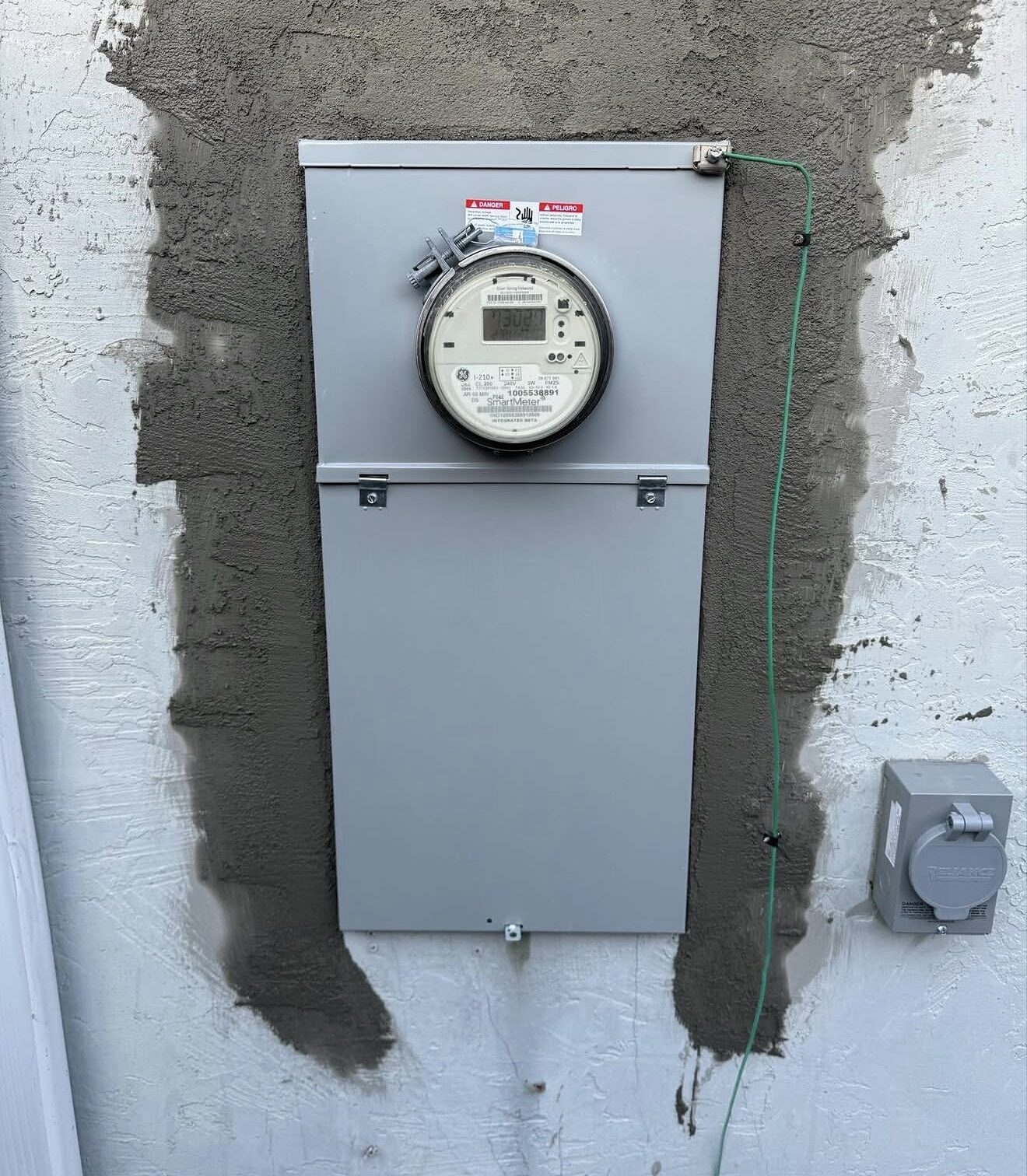
The generator connects to the panel via a generator inlet box — a weatherproof receptacle mounted on the exterior of the home. You run a cord from your generator to the inlet, and the power routes through.
Interlock kits are the more affordable option and work with your existing panel without rewiring. The trade-off is that they require manual switching, and you're powering everything the panel serves — which means your generator needs to be sized for whatever circuits you run simultaneously. Most people leave non-essential breakers off and only run what they need.
Transfer Switch
A transfer switch is a separate sub-panel that sits next to your main panel. It contains a fixed set of circuits — typically 8–10 — that you've pre-selected as your priority loads during an outage. The switch itself physically disconnects those circuits from the utility feed and connects them to the generator feed.
Manual transfer switches work similarly to an interlock from an operation standpoint — you flip the switch when power goes out. Automatic transfer switches (ATS) detect the outage and switch over without any manual involvement, which makes more sense for standby generators than portables.
Transfer switches cost more than interlock kits and require more installation work because you're adding a new panel. The advantage is that you're working with a defined set of circuits, which makes load management easier.
Which One Makes Sense
For most homeowners with a portable generator, an interlock kit is the right answer. It's less expensive, works with any code-compliant panel, and accomplishes the same safety goal. The manual switching isn't a meaningful inconvenience for most outage scenarios.
A manual transfer switch makes more sense if you want a cleaner dedicated setup with specific circuits pre-selected and clearly labeled for outage use.
An automatic transfer switch paired with a standby generator makes sense if you want a system that operates without any manual intervention — the generator starts, the switch transfers, the house runs normally. That's a bigger investment but a different category of solution.
Either way, the inlet box, the interlock or transfer switch, and all associated wiring should be done by a licensed electrician and permitted. The job isn't complicated, but the consequences of doing it wrong are significant.
Category
Generator Hookups
Published
March 2025
Written by
Cyber Electric LLC
License #1075088
Get an Estimate
Ready to move forward?
Licensed electrical contractor serving Modesto, Stockton, and the Central Valley. We review every request personally and follow up the same day or next morning.
License #1075088 · Modesto, CA