Battery Backup for Your Home: What the SigenStor and Powerwall 3 Installs Actually Look Like
Whole-home battery systems are more complex than the marketing materials suggest. Here's what two real installs — a SigenStor in Pleasanton and a Powerwall 3 in Fremont — actually involved.
The pitch for home battery storage is simple: store energy when rates are low or solar production is high, use it when it isn't. Keep the lights on during an outage. It's a real value proposition. The installation behind that pitch is less simple, and understanding what's involved helps you ask the right questions before you commit.
We've installed both the SigenStor system (Sigenergy) and the Tesla Powerwall 3. Here's what each job actually looked like.
SigenStor Whole-Home Battery — Pleasanton
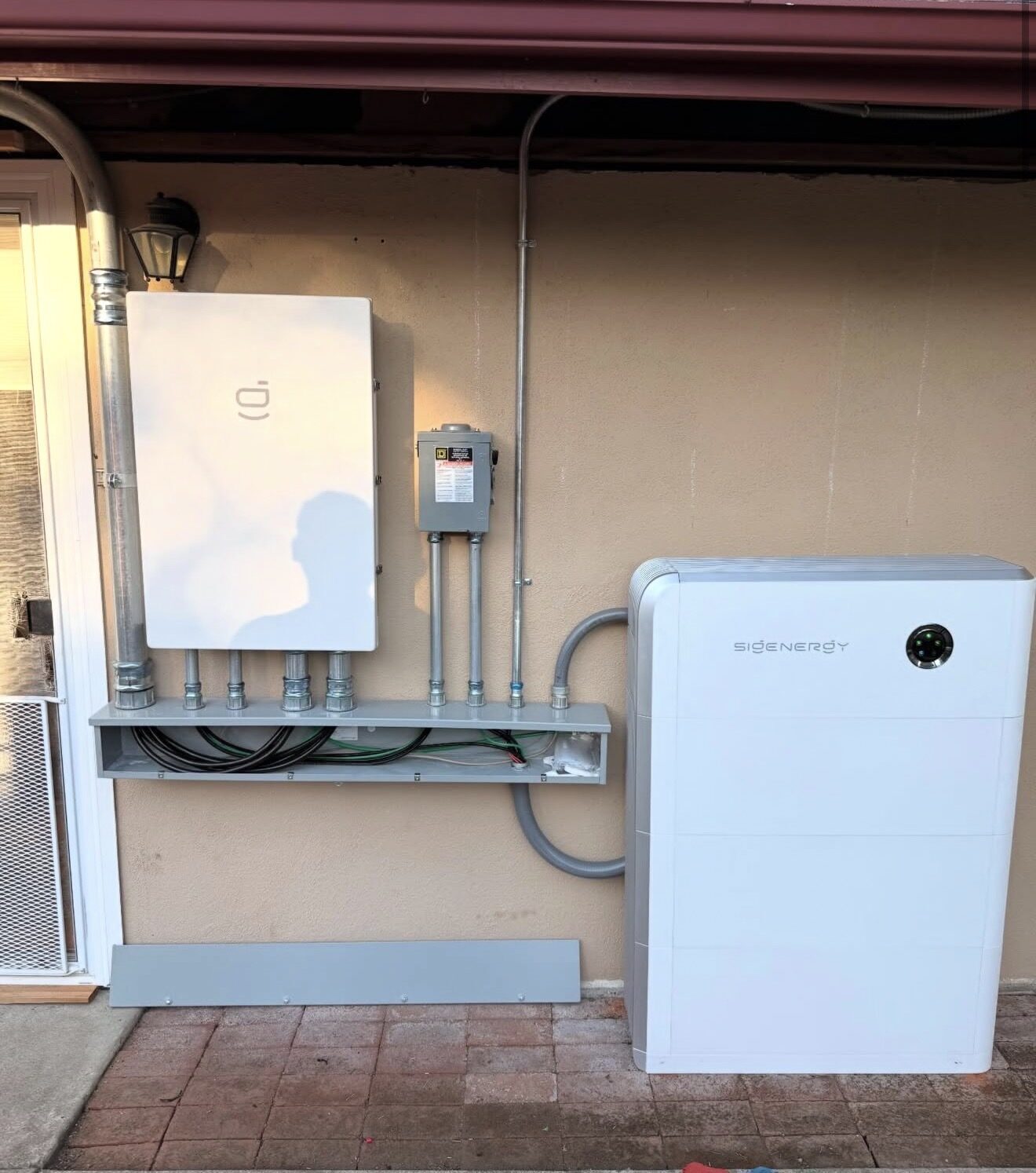
The Pleasanton installation was a full SigenStor system paired with the Sigen Load Hub — Sigenergy's smart load management panel. The homeowner had an existing solar array and wanted battery storage to complete the backup capability.
Adding battery to an existing solar system isn't plug-and-play. The battery, inverter, and utility interconnect all need to communicate properly, and the conduit runs have to handle the full throughput of both solar production and battery charge/discharge cycles simultaneously.
The scope required running 2.5" conduit from the main service panel to the new Load Hub location, then pulling two separate sets of 3/0 conductors — one for the grid connection into the Load Hub, one feeding the backup loads panel. That separation is what allows the system to transfer cleanly during an outage: critical circuits stay live, non-essential loads shed automatically.
Inside the Sigen Load Hub are smart breaker slots that prioritize which circuits get battery power. The termination work — 3/0 conductors landed and torqued to spec — is what separates a clean, inspectable install from a rough one. This system was installed permit-ready and passed inspection.
Tesla Powerwall 3 — Fremont
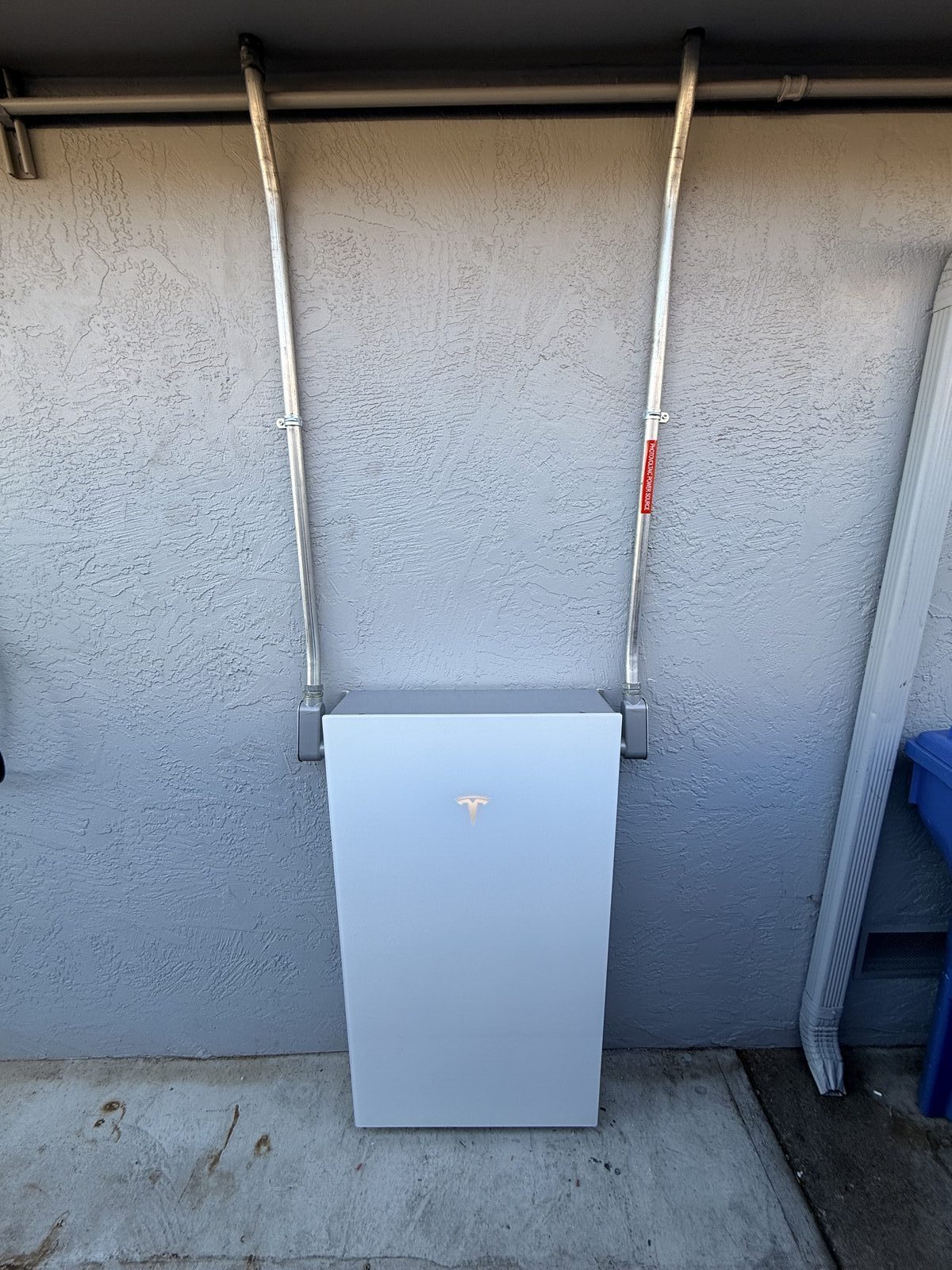
The Fremont job was a Powerwall 3 with a dedicated solar rapid shutdown system. The Powerwall 3 integrates the inverter, battery, and gateway into a single enclosure, which simplifies installation compared to earlier generations that required a separate gateway box.
Two conduit runs enter the top of the unit through the mounting bracket: one carrying solar DC conductors from the roof array, one carrying the AC service connection. The DC bus — gold terminals on the right side — is where the solar string conductors land. The AC terminations are on the left. Everything gets torqued to Tesla's specified values before the cover is closed.
The rapid shutdown switch is a California code requirement for solar installations — it de-energizes the roof conductors within seconds for fire department access. The Eaton unit on the adjacent wall is the labeled emergency stop point for this system.
What Both Systems Have in Common
Both installations required permits, inspections, and utility coordination before the systems could be energized. Both required careful conductor sizing, conduit routing, and coordination between the battery, the existing solar, and the utility interconnect.
The marketing for battery storage focuses on the app and the outage protection story. The installation side — conduit sizing, load hub configuration, rapid shutdown compliance, utility interconnect — is where the licensed contractor's work actually lives.
If you're considering battery storage with existing solar, the most important early question is whether your existing inverter is compatible with the battery system you're considering. That answer affects scope and cost significantly.
Category
Backup Power
Published
June 2025
Written by
Cyber Electric LLC
License #1075088
Get an Estimate
Ready to move forward?
Licensed electrical contractor serving Modesto, Stockton, and the Central Valley. We review every request personally and follow up the same day or next morning.
License #1075088 · Modesto, CA